Beam 2 Beam Flooring
System
Introduction
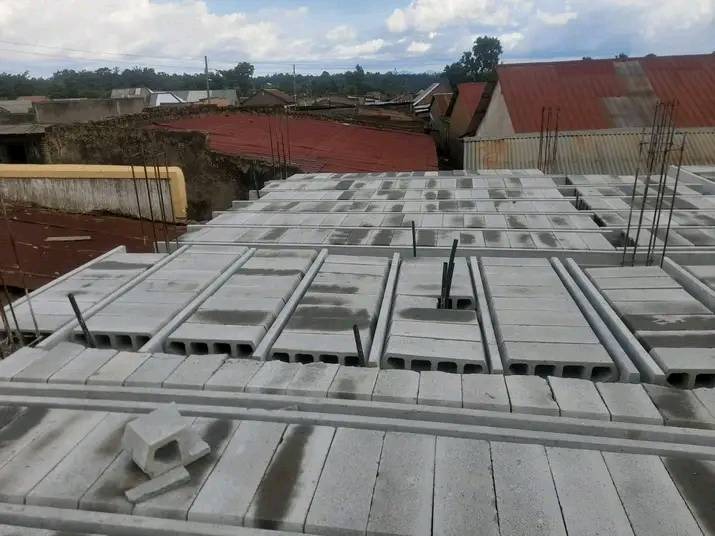
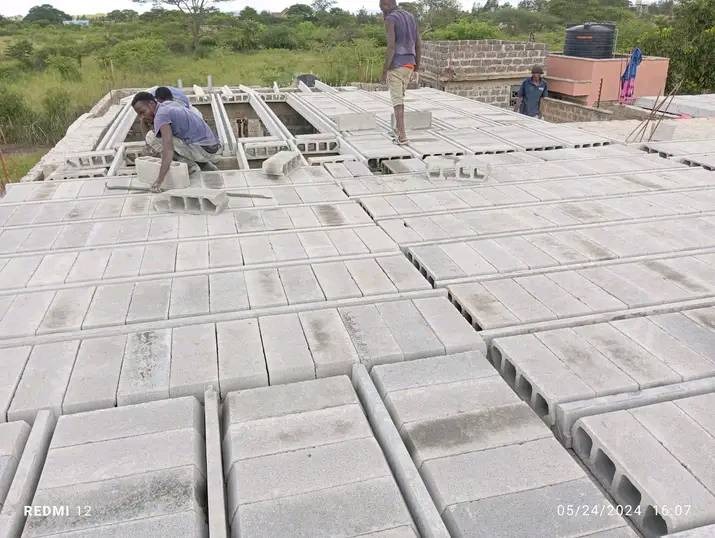
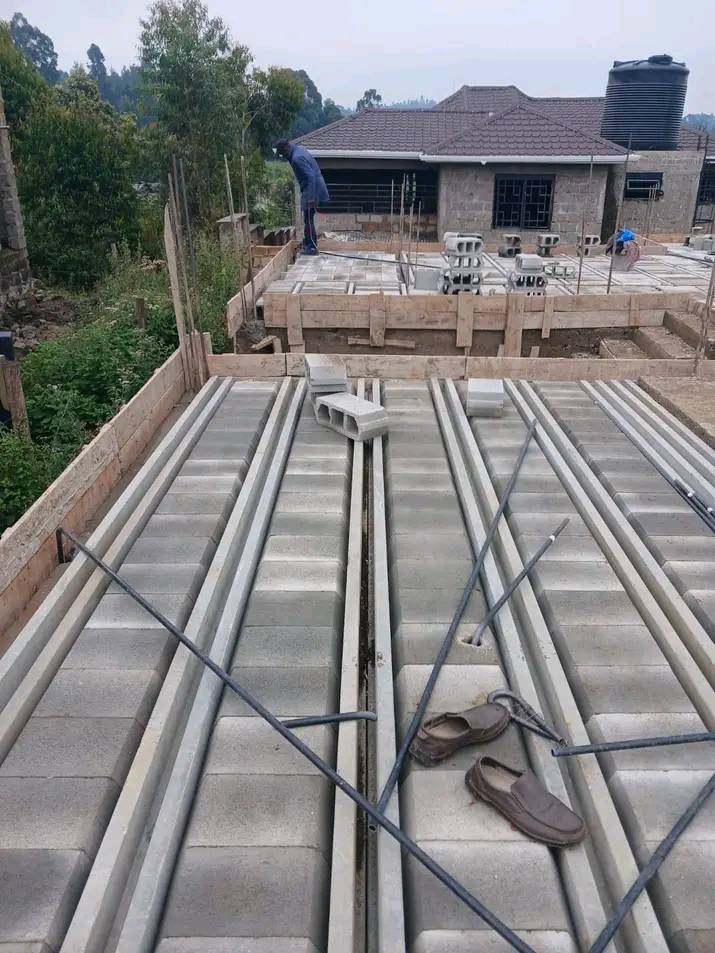
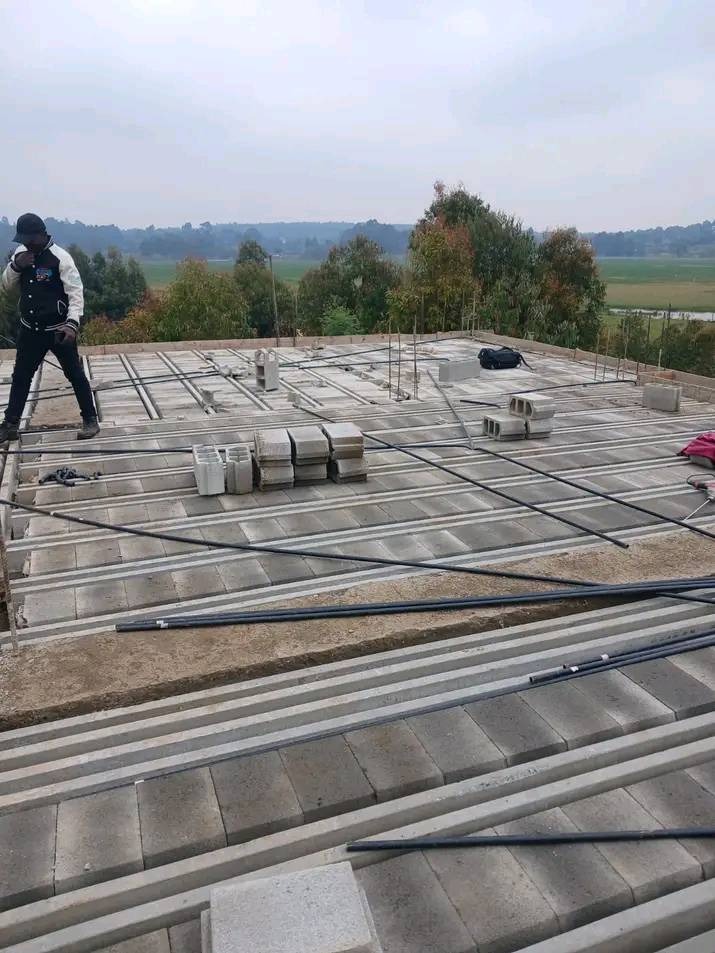
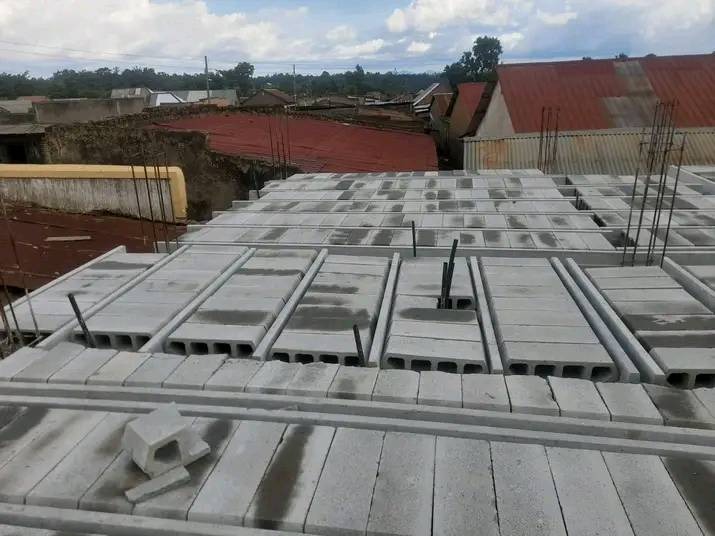
Beam-to-beam flooring (BBF) is a cost-effective, secure, and efficient slab construction system widely used both locally and internationally. The system consists of high-strength pre-stressed concrete beams, hollow concrete blocks, and a concrete topping that combine to form a strong and durable slab structure.
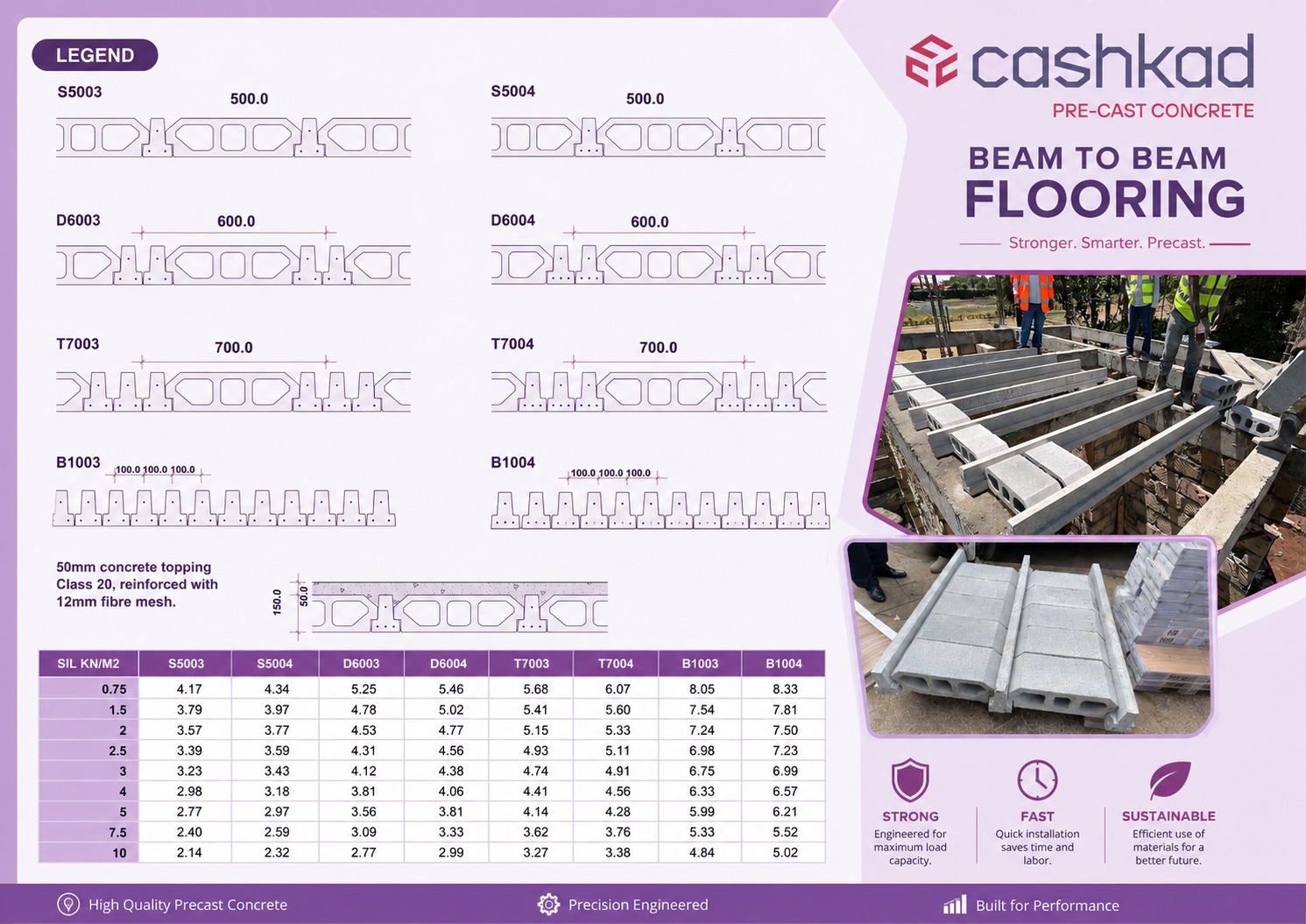
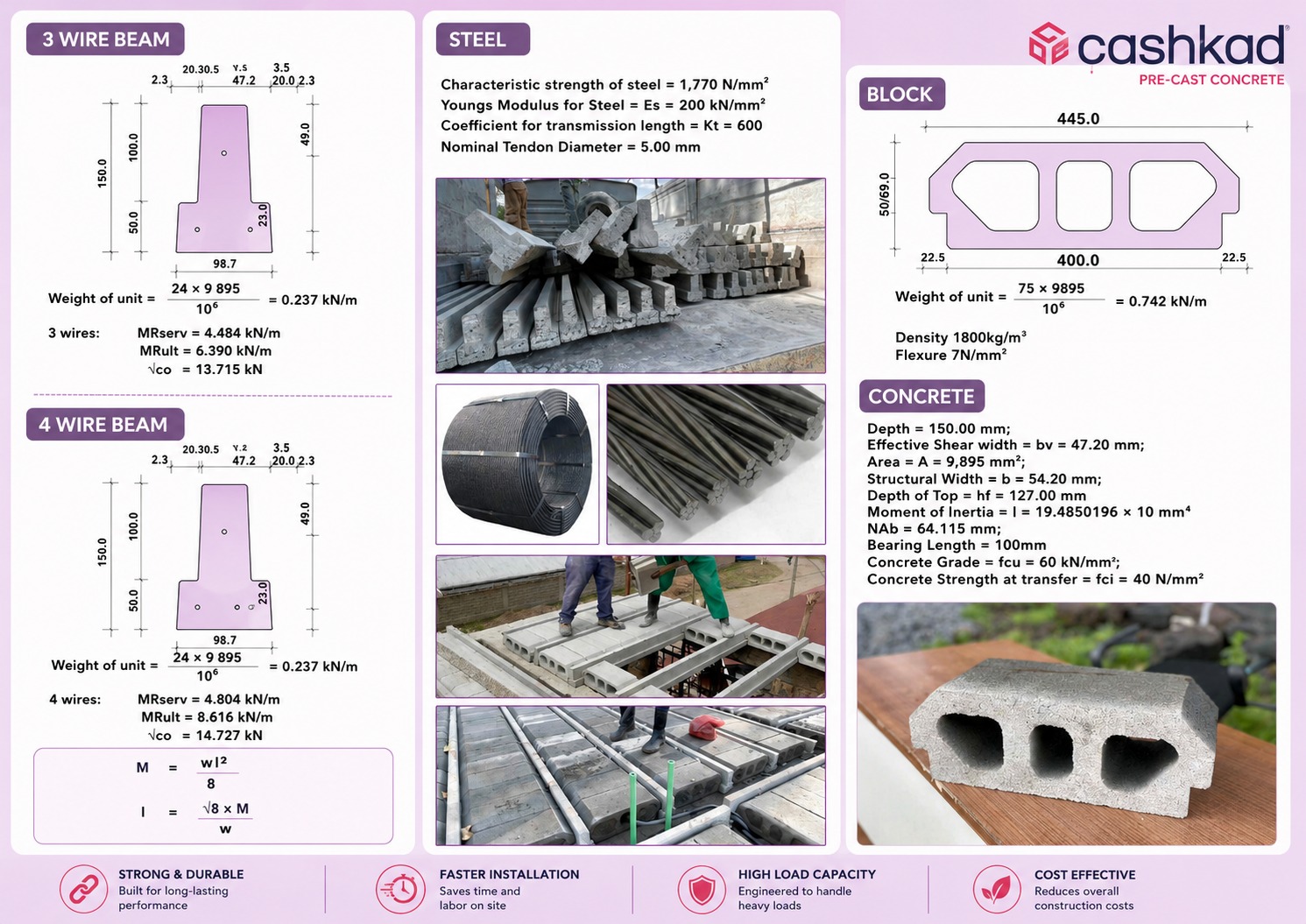
The pre-stressed concrete T-beams feature a flange measuring 100mm in width and 50mm in depth, along with a web section that is 50mm wide and 100mm deep. These T-beam joists work together with the hollow concrete blocks to support the 50mm concrete topping as well as the various design loads applied to the slab.
How It Works
The hollow blocks utilized in this system possess a high compressive strength of 3N/mm², enabling them to function as structural components rather than ordinary hollow blocks that mainly serve as fillers to achieve the required slab depth.
These blocks interlock by 100mm on both sides of the pre-stressed concrete beams. As a result, the load is transferred from the concrete topping to the hollow blocks, then to the pre-stressed beams, onward to the reinforced concrete beams of the respective floor, followed by the columns, and finally down to the foundations.
Productions
The pre-stressed concrete T-beams are manufactured in a specialized pre-stressing yard where all essential design conditions are carefully monitored to ensure the production of high-quality beams. A concrete mix capable of achieving Class 60 strength, equivalent to a compressive strength of 60N/mm², is used during production.
During casting, 5mm tendons are tensioned between secure end anchorage points and concrete is poured over them along a casting bed. The beams are then left to cure adequately until the concrete reaches the required minimum strength, after which the tendons are released. Beam lengths are predetermined before casting to minimize material wastage.
In conventional reinforced concrete structures, most of the stresses caused by loads are typically carried by the reinforcement bars. However, in pre-stressed members such as Beam2Beam beams, the stresses are distributed throughout the entire structural member. This results in a stronger structural component with improved resistance to vibrations and shock loads compared to ordinary reinforced concrete systems.
Applications
Pre-stressing is mainly applied to achieve longer spans and reduce the structural depth of beams and slabs. Pre-stressed concrete elements are widely utilized in structures where span length is a key factor, including floor beams, bridges, water tanks, roofs, runways, railway sleepers, and poles.
One of the major advantages of pre-stressed concrete is its ability to span greater distances more economically than conventional reinforced concrete. This makes it highly beneficial in infrastructure projects such as bridges, as well as in building construction for beams and slab systems.
Today, pre-stressed concrete is commonly used for floor beams, piles, railway sleepers, bridges, water tanks, roofs, and runways. Although it is generally unnecessary for columns and walls, it can still provide an economical solution for tall columns and retaining walls subjected to high bending stresses.
As a general guideline, conventional reinforced concrete remains the most cost-effective construction method for spans of up to 6 metres.
Advantages of the BBF System
Reduced Foundation Excavation
Minimizes extensive excavation works, especially in expansive soils. Lowers labor and transportation costs for disposing material.
Lower Steel Fixing Costs
Reduces the time and labor required for cutting, bending, and fixing reinforcement bars in slab construction.
Savings on Materials
Replaces conventional BRC mesh with fibre mesh in the topping, which is more cost-effective and reduces installation labor.
Minimal Shuttering & Propping
Interlocking blocks with pre-stressed beams greatly reduces the need for extensive shuttering. Only RC floor beams require propping.
Improved Fire Resistance
Pre-stressed beams enhance the building’s fire rating due to the substantial concrete cover protecting the internal tendons.
Faster Assembly Time
Pre-cast components make installation quick and efficient, leading to shorter construction periods and improved project timelines.
Enhanced Structural Performance
Pre-stressed beams help minimize cracking, reduce reinforcement corrosion, and extend the overall lifespan of the building.
Increased Headroom
The flooring system sits above the reinforced concrete beams, creating greater floor-to-floor height and improved interior space.
Better Sound Insulation
Hollow concrete blocks assist in reducing sound transmission by disrupting sound waves, resulting in quieter indoor environments.
Technical Specifications
Detailed load capacities, dimensions, and material strengths engineered for maximum performance.